
Patrick Harkness
Writer
Commercial Diver who moved from Ohio to New Orleans. Covering Tulane Green Wave Football, Basketball, Recruiting, and Scouting. Fan of the Cincinnati Bengals, Cincinnati Reds, THe Ohio State Buckeyes, Cleveland Cavs and of course Tulane!
#RollWave #WhoDey #GoBucks
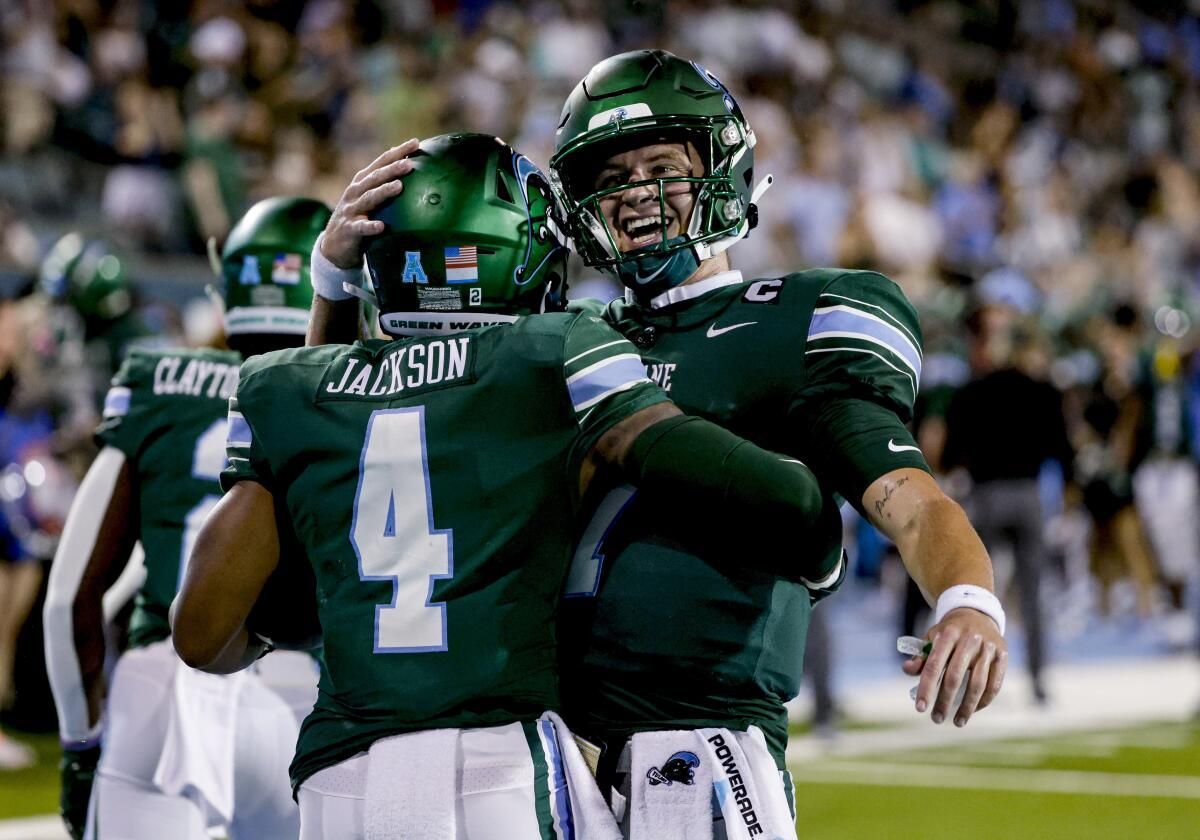
🚨Conference Opener Preview🚨 Saturday, October 10, 2026 11:00 a.m. CT Blaik Field at Michie Stadium CBS Sports Network American Conference opener for the Wave. My QB prediction: Trace Johnson Starts and Dagan Bruno running option plays! Last year in Uptown, Tulane took this one 24-17. The year before that, in this building, Army took the American title game 35-14. Jeff Monken is 1-5 against Tulane. The one win is that championship night. Both teams are 2-2. Army is a 3-point favorite. Total sits at 48.5. The Wave just took the Bell back against Southern Miss, then got a bye. Army just lost 31-29 at Louisiana Tech after the defense gave up 503 yards. Cale Hellums and that option are still first in the country in rushing. The Army defense is not. Can the Wave get enough snaps to make that matter? Sponsor: @RedshirtLtd CODE: RDW = 10% Off The Best Tulane Licensed Lids Around! Tulane Green Wave: Year 1 of the Will Hall era. 17-3 at Duke. 28-24 over South Alabama when Jaylin Lucas ran for 214 and Kadin Semonza hit Destyn Hill late. 31-20 at Kansas State. Then 24-21 over Southern Miss to take the Bell, with Maurice Turner going for 200 on 12 carries. Hall has not named a starter. Semonza has started three straight: 646 yards, 3 TD, 1 INT, about 54%. True freshman Trace Johnson got a look in relief against Southern Miss (2-of-5, 35 yards). Zeon Chriss is still in the building. Roster reality heading into Saturday: The Wave still cannot stay on the field. Time of possession is 25:42, near the bottom of the FBS. Army lives at 34:42, top five in the country. That gap is the game. What is still Wave culture: Lucas and Turner have the explosives. Destyn Hill is the chain-mover and the shot play, 12 catches, 169 yards, a score. Anthony Brown-Stephens said it plain this week: they leave plays out there, and they know they have the guys. Jamauri McClure (foot) practiced Tuesday and Wednesday. Hall said Thursday he expects McClure, Turner (leg), and Zycarl Lewis Jr. (lower leg) to play barring a setback. Lewis was the forgotten man coming back from 2025. Hall called him maybe the most explosive player they had. Offensive line Hall likes from the Southern Miss finish: Dominic Steward, Gresham Perry, John Bock, Reese Baker, Ryan Mickow, left to right. Darion Reed is likely out. That five closed the Bell game. They have to do it again on the road. Army Black Knights: Year 13 of Jeff Monken. They smashed Bryant 59-3, lost 28-24 at home to South Florida, won 21-17 at Temple, then lost 31-29 at Louisiana Tech. Hellums threw for 151 and ran for a score in Ruston. Samari Howard went 12 for 158 and a touchdown. Hellums is the offense. 337 passing, 3 TD, 1 INT. 301 rushing and 6 scores. Howard is at 293 on 27 carries, 10.9 a pop. Godspower Nwawuihe has 164 and 2. Zach Mundell has 159 rushing and 3 scores, plus 84 receiving. Army is first in the FBS in rushing at 334 a game. They are 135th in passing. That is not a flaw in this offense. It is the plan. The defense returned three starters. Opponents are at 6.89 yards a snap, near the bottom of the country. Army still allows only 19.8 points because the defense barely plays. 54 snaps a game. If Tulane gets the ball, the numbers say the Black Knights can be had. If they do not, none of it matters. Both teams are 2-2. Only one of them controls the clock for a living. Monken is not going to reinvent Saturday. Fullback, quarterback, slot. Hellums on the mesh. Howard and Nwawuihe on the edge and the pitch. Mundell as the home run if the Wave flies up. Third down is where Army wins games. They convert 50%. Fourth down too: 6-of-7. They do not punt themselves off the field. 79 rushing first downs already, most in the country. Hellums does not have to throw it. When he does, it is off the run fake. Brady Anderson is the chain target (7-102). One interception on the year. Do not give him a free one. Tulane’s 4-2-5 under Tayler Polk and Nate Fuqua just watched this movie. Nate Sheppard for 227 at Duke. South Alabama held the ball 37 minutes. Avery Johnson for 152 and two scores at Kansas State. Southern Miss was better. It was not clean. The Wave allows 191 rushing yards a game. Army runs for 334. That is the mismatch on paper. Dickson Agu and Makai Williams have to fit the dive and not chase the pitch. Jack Tchienchou and Kevin Adams III have to be right on the edge and right on the quarterback. The young ends have to set it and stay set. Army wants the force player to widen, then the fullback kicks him and Hellums is gone. Will Hall said the quiet part. Stop them for 2 and do not let the pile turn it into 4. Third-and-6 is a win. Third-and-3 is Army’s offense. Chris Rodgers was out against Southern Miss. If he is back, the spy and the edge fit get a veteran. If he is not, Williams and Agu have to be perfect for 60 minutes they may only play 25 of. Louisiana Tech just ripped this defense for 503 yards and 7.4 a carry. South Florida and Temple were in the same neighborhood once you throw out Bryant. The vulnerability is real. Tulane only gets to it if the defense gets off the field. X Factor: Win first down. If Hellums is in third-and-short all day, Michie never gets quiet. If the Wave tackles at the point of attack, Army has to throw, and this secondary can hunt. Hall and Russ Callaway cannot fall behind the chains and live on third-and-long. Army will take that. They want four snaps, a punt, and another eight-minute drive. Semonza, if he starts, does not need 40 throws. He needs to be on schedule, hit Hill, Brown-Stephens, and Lewis when the box loads, and not turn it over. If Hall goes to Johnson or Bruno (Option), the rule does not change. Protect it. The possession count will already be short. The line is the swing unit. Thirteen sacks allowed in four games. That cannot happen against a defense that only needs a couple of negative plays to end a drive. Steward at left tackle is the piece that closed the Southern Miss game. Baker is the veteran. If that five stays together, Tulane can run it. Lucas is the explosive. Turner just went for 200. McClure, if he is actually back, is the closer they have not had. Lewis is the vertical they lost in the Duke opener. Hill already has the explosive gene. Army has allowed 8.1 yards a play to FBS opponents since Bryant. South Alabama, one of the few defenses worse than this one, gave up 212 on the ground and 212 through the air to this same Wave. Red zone is the other leak. Army has allowed a score on every red-zone trip. Tulane has to finish. Field goals in a 28-possession game are how you lose by 7 at West Point. Last time these teams were in this building, Army won the title game 35-14. Last time they played, Tulane won 24-17 in Uptown. In 2019, with Hall calling the offense for Willie Fritz, the Wave put up 525 in a 42-33 win here. Different roster. Same building. Same problem: you have to get the ball. X Factor: Explosives without the empty possessions. One sack-fumble or one red-zone stall and Army’s clock does the rest. Three keys for Tulane: 1. Tackle the dive and set the edge. Hellums, Howard, Nwawuihe, Mundell. If the pile moves forward, this is a 34-minute Army game and the offense never sees the field. Third-and-6, not third-and-3. Force a throw. Do not let a quarterback who has thrown 54 times all year get comfortable play-action. 2. Get McClure, Turner, Lucas, and Lewis on the field together and feed them. The portal is not the issue Saturday. Finishing drives is. Army cannot cover all of that if the line gives them a hat. Hill should never leave. Lewis is the shot they have been missing. 3. Win the snaps you get. The line does not have to dominate for 70 plays. It might only get 55. Clean pocket on first and second down, a run that moves the chains, no turnovers. Third-and-long is where Duke and Kansas State got away. Stay ahead of the sticks and the 6.89 yards per play Army is allowing becomes the story instead of the clock. Michie will be loud if Army punches first and keeps it. It gets nervous if Tulane hits one early and forces Monken off the mesh. Play complementary, tackle, finish in the red zone, and steal the possession game. That is the only way a 2-2 Wave walks out of West Point with the conference opener. #RollWave Make sure to follow Patrick Harkness on X
The U.S. Senate passed the Protect College Sports Act 77-22 on Monday night, sending the most ambitious federal overhaul of college athletics in decades to the House. For Tulane, a private AAC program that just used the transfer portal and its Green Wave Talent Fund to reach the College Football Playoff, the bill is less about joining the Power 4 and more about whether the current model can be made sustainable. The legislation, co-authored by Sens. Ted Cruz and Maria Cantwell, would create a single national framework for NIL, transfers, eligibility, and compensation after years of state-by-state rules and court-driven chaos. It is not yet law! The House is on recess until after the midterms, and passage there is not guaranteed. Still, the Senate vote itself is a signal that Congress intends to impose order on a system that has rewarded programs able to cycle talent quickly, Tulane among them. Roster rules that would slow the portal. Undergraduates would receive one penalty-free transfer. A second move would require sitting out a year. Eligibility would be standardized at five years. Those two changes would have altered the 2025 and 2026 Green Wave football rosters, which featured dozens of incoming and outgoing transfers after Jon Sumrall’s departure for Florida and the arrival of first-year coach Will Hall. Tulane men’s and women’s basketball have also leaned heavily on the portal. A one-and-done transfer rule would not freeze movement entirely, graduate transfers would still have more flexibility but it would raise the cost of serial jumping. For a program that has turned roster turnover into a competitive advantage, the trade-off is clearer recruiting calendars and fewer mid-cycle surprises. The bill also includes a “Lane Kiffin rule” restricting FBS coaches from leaving for another head-coaching job in-season. Sumrall’s move occurred after the season, so it would not have applied, but the provision is aimed at the kind of mid-year instability that has become common. Money: caps, retention funds, and the Talent Fund The House settlement already allows schools to share roughly $21–22 million in revenue with athletes. The Protect College Sports Act would add a $22.5 million “retention fund” that can grow to $27.5 million if a school also spends on NIL for women’s and Olympic sports. Combined, the ceiling approaches $50 million per school. Tulane’s Green Wave Talent Fund, launched with major gifts from alumni and a $100,000 donation from Sumrall himself, already exists to handle direct payments and NIL in the post-settlement world. The new federal buckets would give the athletic department additional, legally shielded tools to keep players rather than constantly replacing them. Whether Tulane can actually spend to the cap depends on media revenue, donations, and CFP performance money, the AAC’s unique performance-based distribution already delivered Tulane an $8.1 million CFP payout after its 2025 title. #RollWave Make sure to follow Patrick Harkness on X
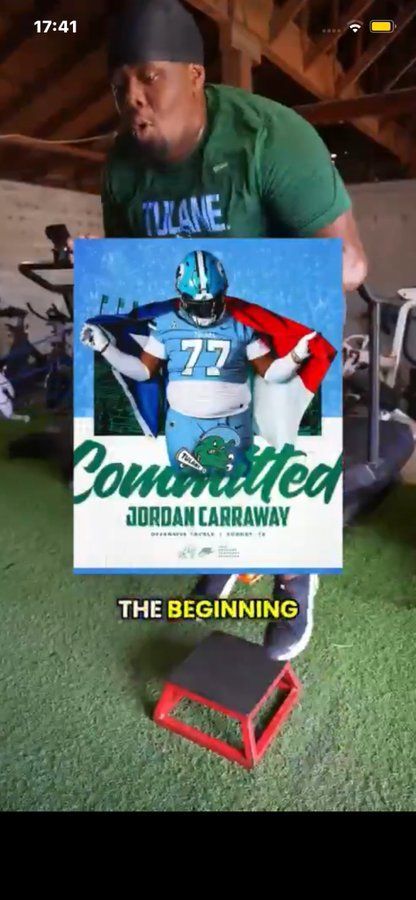
Jordan Carraway- @JordanCarraway6 6-6/295 Dallas, TX As projected Tulane lands a talented OL man. Carraway possesses excellent size, length, and frame for a college interior lineman or swing tackle, with long arms/wingspan, good hip flexibility, and surprising athleticism/explosiveness for his mass. • Elite Size & Power: Massive frame with long arms; mauls at the POA in zone schemes, drives defenders backward, and finishes blocks violently into the second level. Heavy hands, strong punch, and tenacious “mean streak.” • Athleticism & Movement: Nimble feet, good hip flexibility, quick get-off, and lateral agility for his size. Excels pulling, sealing lanes, and mirroring in pass pro with a firm base and quick kick-slide. • Technique & Motor: Consistent pad level, violent hands upon engagement, high effort through the whistle. Camp notes call him one of the most consistent in 1-on-1 pass pro and run drills. • Versatility & Upside: Experience at guard/tackle; track athleticism and early production suggest high developmental ceiling. #RollWave Make sure to follow Patrick Harkness on X
Tulane football is not short on players who will compete. That much was clear in the 28-24 win over South Alabama, when the Green Wave found a way at Yulman and reminded everyone what this roster can look like when the plan matches the talent. The problem sitting over this 2-2 start is not effort in the locker room. It is decision-making in the offices above it. From the December search to the portal to the Week 1 depth chart to who is wearing the headset on Saturdays, the staff has spent nine months choosing caution when the moment called for conviction. The players have been asked to live with those choices. That is the story of this season so far. The hire that set the tone: When Jon Sumrall left for Florida after a College Football Playoff run, Tulane held one of the best Group of Five jobs in the country. The search did not treat it that way. Blake Baker, a former Green Wave linebacker and then LSU’s defensive coordinator, was the first choice. Tulane interviewed him. Memphis interviewed him. Lane Kiffin used that interest the way a Power program uses it. He kept Baker in Baton Rouge on a three-year deal reported at $9.3 million. Baker later said the alma mater pull was real, then said there was “not a better defensive coordinator job” than the one he already had. Tulane became the leverage, not the landing spot. By the time Baker was off the board, the rest of the short list had moved. Bob Chesney went to UCLA. Charles Huff went to Memphis. Billy Napier landed at James Madison. Jason Candle took UConn. The window closed, and the athletic department promoted from inside. Will Hall knows this place. He coordinated the offense here in 2019 and 2020. He came back in 2025 as passing-game coordinator. Continuity after a historic year had an argument. It was also the option left after the favorite used the opening to get paid at LSU and every other serious name took a job elsewhere. A championship program spent its most important offseason decision waiting, then settled. That is how the year started. It is also how the year has been coached. Caution in the portal: Hall was open about the quarterback plan. The staff did not want to “over-sign transfers and squish the development” of the young players already in the room. The idea was two older quarterbacks to compete, then let Trace Johnson, Jay Beamon, Bruno and Cade Scott grow behind them. That sounds careful. In this sport, it also sounds like a staff more worried about hurting feelings in the meeting room than about winning the first month. The previous year Sumrall brought in 4 potential guys fighting for one job. Jake Retzlaff was gone. The 2025 offense ran through him. The response was not a finished portal veteran who had just won at this level. The response in the portal was way more to be desired. The same hesitation showed up on the DL. The Wave added players. What the staff did not add was a true veteran pass-rush closer, the kind of player who wrecks a game in September while a new defensive staff is still installing, granted that was supposed to be McCallister but he is no longer on the roster. Through the first three games Tulane had one team sack. A defense that posted 34 sacks across 13 games a year ago was generating almost nothing. That is not the players failing to rush. That is a personnel plan that asked a transitioning front to create pressure without the one piece that makes a new scheme look fast. Protect the room. Don’t scare anyone into the portal. Those are coaching and front-office choices. They have shown up on third down, run defense, and pass rush. Week 1 starter Decision: Chriss-Gremillion at Duke. Hall cited experience, dual-threat ability, fewer turnovers in practice, and speed. That is a coaching evaluation. It is also the evaluation that put the wrong plan on the field for the opener. Duke 17-3. Chriss was pulled at halftime. Semonza finished the game and started the next one. Against South Alabama he threw for 212 yards, Jaylin Lucas ran for 214, and Tulane won 28-24. Led an amazing comeback and beautiful throw. None of that is an indictment of Chriss as a player. He did what the staff asked him to do in a system still being installed. The mistake was the decision itself: taking the more natural passer off the card for Week 1 on the road against a Power conference defense because the staff liked the look of the dual-threat package in August. Starting Semonza a week later was the correction. The correction should not have been required. I like Semonza a lot and want nothing more than success for him but he is not a finished product. No quarterback in this room is, because the staff chose not to bring in a finished one. That, again, is on the people drawing the depth chart. Callaway on the headset: Russ Callaway is in his first season as Tulane’s offensive coordinator. He held the same title at Florida a year ago. He last called plays as a primary play-caller at Samford. The offense this fall has looked like a staff still arguing with itself about what it wants to be. The scoring line is the tell: 3 points at Duke, 28 at home against South Alabama, 20 at Kansas State, 24 against USM. 18 points per game. Three hundred fourteen yards per game. When Lucas gets 214 on the ground, this team can win a one-score game. When the run game is contained and the passing attack has to carry a series, the operation slows down and the play sheet feels a series or two behind. That is not receivers dropping balls (minus USM) or backs missing holes as a rule. It is structure. Protection. Tempo. Play selection on second-and-medium. The things a play-caller is paid to solve. Hall is an offensive coach. That is why he was hired. Leaving the call sheet with a first-year coordinator while the offense searches for an identity is the same pattern as the hire and the portal: defer, protect, wait. The first change should be the headset. Will Hall should call the offense from here on out. That is not a public firing. It is the head coach taking ownership of the unit he was sold as being able to run. A defense that has not been put in position to look like itself: Tayler Polk inherited real pieces. Jack Tchienchou and Dickson Agu are still here. Chris Rodgers (Hurt) is still here. Kevin Adams III has been around the ball. The names are familiar. The results have not matched the standard this program set a year ago. Tulane is allowing 24 points and 429 yards per game. Opponents are running for 211 yards a night. The pass rush has not arrived until they played a bad USM team. The players are tackling and competing. They are not dictating, because the staff did not give this front the veteran disruption it needed and has not yet found a way to manufacture it with what is here. Granted some positives did come from USM. A playoff defense does not become average because the calendar flipped. It becomes average when the scheme and play-calling haven’t been up to par and need to be re-tooled. Give Trace Johnson a real plan: Trace Johnson is a true freshman. He is also the best pure passer on the roster, and people inside the building have said as much since spring. Hall has called him driven, accurate, and the kind of player who would have carried a different recruiting label if he were three inches taller. Johnson was in the offices watching film at 5 a.m. the morning after he was told he was not in the Week 1 mix. That is not a kid hiding from the moment. That is a kid the staff recruited as the next Pratt or Mensah, then parked. From here on, he should get a shot. Not a garbage-time cameo. A plan. If the offense keeps settling, the coaching staff owes this season a look at the quarterback it asked fans to be patient for. Protecting the room in January only works if the room is used. Using it means Johnson is in the conversation now. What is still true: The South Alabama win was not a fluke of officiating or weather. It was this roster when the staff simplified enough to let the skill players work. Lucas looked like the most explosive back on the field. Johnnie Daniels and Maurice Turner give Tulane a backfield that can tilt a game. Destyn Hill and Anthony Brown-Stephens can take the top off a coverage. Tchienchou, Agu, and Adams will play. The locker room that went to Oxford in December did not forget how to compete in nine months. Hall knows Yulman. He knows this city. The American schedule is still in front of them, Army, Memphis, UTSA, the November stretch. None of that is closed. A 2-2 start in a transition year is not a death sentence if the next set of decisions is better than the last one. The last year-plus has been a study in hesitation at the top: letting Baker walk the job to a raise in Baton Rouge, refusing to crowd the quarterback room, passing on veteran edge help, naming the wrong starter in Week 1, and handing the offense to a coordinator still finding the fit. The players have answered when they have been put in position. The correction is not a press conference about culture. It is Hall taking the headset, Johnson getting real snaps, and this staff coaching the roster it has like a playoff program it is. South Alabama showed what this team looks like when the decisions catch up to the talent. That version is still available. The rest of the season will tell us whether the people making the choices are done being careful. Look you may not agree with me on this or like it, but I’m just trying to be 100% honest with how I feel with the state of Tulane football. I love this team to much to settle for mediocrity. I want nothing more than success for all the players, Tulane and its coaches now and in the future. Hopefully in Jan we can look back at this and say I was dead wrong and everyone can call me an idiot. Nothing would make me happier! #RMFW #RollWave #WinTheAAC Make sure to follow Patrick Harkness on X