
LSU Spring Recap
Anthony Parker • April 27, 2026

Spring Practice was Vital for this LSU team, and they were able to make the most of it.
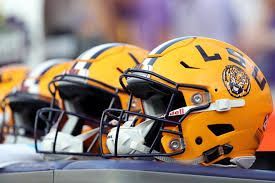
Lane Kiffin arrived in Baton Rouge in December with one mission: restore football greatness at LSU. Most anticipated that immediate results would follow, but not the tsunami-style waves he created throughout the transfer portal process. Kiffin was able to secure commitments from multiple players who ranked among the best at their respective positions in the portal. He also landed three of the top ten quarterbacks in the portal. He came to LSU and completely rebuilt the offensive line and wide receiver rooms. Because of the immediate success seen in the portal, the fanbase lit up with excitement and passion. The countdown toward spring practice began almost immediately once the portal closed and the roster was finalized. Let’s also not forget the elite-level talent he secured from the high school ranks within a matter of days. The roster is stacked, excitement is at a fever pitch, and anticipation for the home opener against Clemson is through the roof. But no matter how much talent the roster holds, Kiffin still has to ensure it all comes together.
That’s the benefit of spring football—a new team, a new coaching staff, and a brand-new environment. The defensive side of the ball has plenty of key returning players and retained the majority of its staff, with the exception of the defensive tackle coach. For that role, Blake Baker brought in Sterling Lucas from the University of South Carolina. One of the biggest weaknesses on defense was the lack of pressure from the edge. Lucas will definitely help improve that, but it won’t be just him. LSU secured the services of Jordan Ross, a former five-star edge rusher out of high school who initially attended Tennessee before transferring to LSU this offseason. LSU did not stop there. Kiffin was able to bring in a few of his former Ole Miss players, including the team leader in sacks, Princewill Umanmielen. Ross and Umanmielen are expected to be the starting edge rushers, and throughout spring, they did not fail to impress.
Because of key additions like them, along with safety Ty Benefield and SEC-leading tackler and former Ole Miss linebacker TJ Dottery, the defense jumped out early and held an advantage over the offense. Fans should not be surprised by how well the defensive back room performed or by the expectations placed on them. It will be hard to find a defensive back group in the country that can match this one player for player. DJ Pickett, even as a true sophomore, looks ready to take the next step toward becoming the next great player to come out of DBU. Ty Benefield would surprise no one if he becomes an All-American and contends for the Jim Thorpe Award. LSU has two veteran linebackers leading the group in Whit Weeks and TJ Dottery. Weeks spent most of spring doing light work on the side, which is understandable. He’s a senior in his third year in the defense, so he knows what he is doing. Rest is more valuable for him at this stage.
As for Dottery, he flashed—a lot. His athleticism and ability to quickly diagnose plays showed consistently in practice. He has the ability to run sideline to sideline, make proper coverage adjustments, and impact plays at a high level. Linebackers with this level of ability help complete the defense and properly support the front seven. Speaking of the front, this may be the only area of concern on the defense. LSU secured commitments from what could arguably be one of the best high school defensive line classes ever. Lamar Brown, a five-star athlete capable of playing multiple positions along the defensive front, will contribute early despite not participating in spring due to enrollment timing. Trenton Henderson, a four-star prospect, showed flashes and will see action, though he may not be relied on as heavily as others.
Richard Anderson, a five-star defensive tackle and the top-ranked player at his position, made an immediate impact. He consistently rotated with the starting group and showcased strength, quickness, and elite explosiveness for his size. While he still needs to refine his technique and pad level, he will be an important piece moving forward. Deuce Geralds, another highly rated four-star prospect from Georgia, has also impressed. While he may not have the same size as Anderson or Brown, his strength, quickness, and work ethic are setting him apart. He has consistently worked with the starters and made plays in practice, even seeing time in select offensive packages.
A recurring theme along the interior defensive line is the reliance on true freshmen. While the edge room is experienced, the defensive tackle group lacks that same level of experience. LSU added two transfers from Power Four programs and returned a starter from last season. However, returning starter Dom McKinley has not shown the level of progression expected from a third-year player. Malik Blocton and Stephiylan Green, on the other hand, have shown why they were brought in. The defense will be very good, but depth at defensive back and defensive line remains a concern. As long as health is not an issue, this unit will be one of the best in the country.
Now for the side of the ball everyone is watching: the offense. In one word—everything has changed. The running back room feels familiar, but expect a surprising name to emerge. Everyone knows Caden Durham and Harlem Berry, but Dilin Jones is a name to watch. Jones, a transfer from Wisconsin, has quickly risen up the depth chart. He makes smart decisions behind the line of scrimmage, runs through arm tackles, picks up blitzes in pass protection, and has the power to gain tough yards. He has been one of the standouts of spring practice. While Durham and Berry will still get touches, don’t be surprised if Jones gets more than expected. When you think of a Lane Kiffin offense, think of the Reggie Bush and LenDale White USC offense—this is the type of rotation LSU could have.
At tight end, it starts and ends with Trey’Dez Green. He is a matchup nightmare, and Kiffin has been creative in finding ways to exploit defenses using him. The wide receiver room is completely revamped and extremely explosive. Most of the new additions average well over 15 yards per reception. While breaking down every player could be an article of its own, a few names stand out. Winnie Watkins, who followed Kiffin from Ole Miss, has made plays early due to his familiarity with the system and his smooth route running. Tre Wilson, a former five-star recruit from Florida, has showcased explosiveness, route-running ability, and strong hands. Jackson Harris from Hawaii adds size and deep-threat ability. Jayce Brown from Kansas State can beat press coverage and stretch the field. Malik Elzy, a 6’4” transfer from Illinois, brings size, quickness, and a strong catch radius. Other names to watch include Philip Wright, Roman Mothershed, and Trey Brown.
The offensive line was the group that needed the most improvement, and it has been completely rebuilt. LSU added Jordan Setton, the top-rated offensive tackle in the portal, who has secured the starting left tackle position. Alou Bah will start at right guard after transferring from Maryland. Returning players Braelin Moore (center), Weston Davis (right tackle), and Bo Bordelon (left guard) round out the line. Coaching additions have also played a major role, with James Cregg and Eric Wolford bringing immediate improvement to the run-blocking unit.
Finally, LSU landed quarterback Sam Leavitt, the top overall player in the transfer portal from Arizona State. Leavitt has strong mobility, a powerful arm, and the ability to create plays when things break down. The concern is that he missed most of spring recovering from a Lisfranc injury. He participated in limited 7-on-7 work, but that was it. Meanwhile, Husan Longstreet and Landon Clark split reps. Longstreet, a former five-star recruit, brings strong arm talent and mobility but can make poor decisions at times. Clark, a transfer from Elon, has shown flashes but lacks consistency. Both quarterbacks have upside but need more experience.
As mentioned earlier, the defense dominated early in spring, but as time went on and players became more comfortable in the system, things began to balance out. By the end of spring, the offense was making big plays both in the run and passing game. The offense’s ability to compete against such a talented defense shows that iron sharpens iron. Lane Kiffin, as great of an offensive mind as he is, has never had the opportunity to prepare against a defense this talented or a coordinator like Blake Baker. This offense will make the defense better, and once Leavitt returns and finds his rhythm, the true potential of this team will be realized. Excitement around LSU is justified. This team has the talent and coaching to reach its goals, and seeing it begin to come together is proof that they are on the right track.
A quick share helps us a lot!

The Black and Gold (which one?) will be looking to continue their winning streak across the pond, surrounded by political unrest.
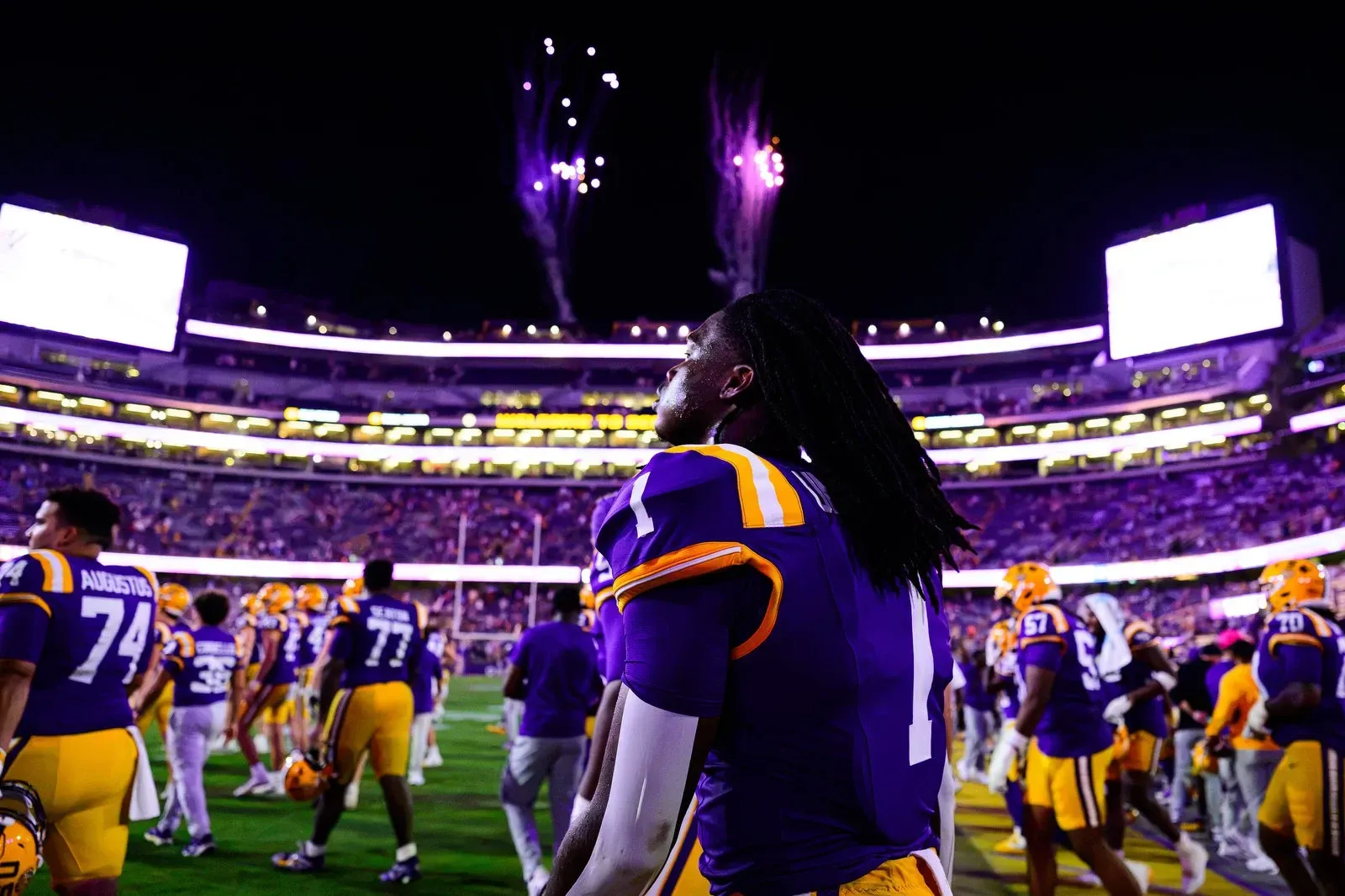
Tiger-on-Tiger/Plainsmen/War Eagle action today as LSU renews its battle with Auburn! This game is a favorite for both fan bases, as it usually involves big plays, superstar heroics, and even some interesting home-field advantages. LSU and Auburn have not played each other since 2023, when the Tigers of Baton Rouge defeated Auburn 48-18. That game was one of the rare blowouts in this series. Unfortunately, with the new nine-game SEC schedule, these two programs will no longer play each other every season. Now, both programs have a lot of hope surrounding them. Lane Kiffin was once courted by the Auburn Tigers, and it was widely believed that, at the end of the 2022 season, Kiffin would make the jump from Oxford to Auburn. However, he decided to stay with the Rebels for three more years. That's when THE Tigers came calling, and this time around, Lane Kiffin decided that Baton Rouge was the better fit for himself and his family. Auburn, on the other hand, has made a few coaching changes since the Kiffin courtship fell through, and now first-year head coach Alex Golesh has this Auburn program feeling very confident about itself. Auburn is coming off one of its biggest victories in the past decade after upsetting No. 1 Georgia on the road last week in Athens. Golesh has Auburn playing a QB-run-heavy offense, as transfer quarterback Byrum Brown leads the team in both rushing and passing. The dual-threat quarterback currently has over 400 rushing yards and more than 1,200 yards through the air. Brown has also added five touchdowns on the ground and another eight through the air. If LSU is going to win this game, the Tigers will have to deal with Brown. The Tigers cannot allow Brown to run downhill. It will be important for Blake Baker to have his defense operate with controlled aggression. The pass rush must maintain lane integrity, avoid rushing past the quarterback's depth, and prevent him from having a free lane to escape. It's important to note that Princewill Umanmielen left last week's game with an apparent head injury but will be a full go for today's matchup. Having one of the nation's sack leaders available will be a major boost, especially considering that true freshman five-star defensive tackle Richard Anderson will be out. Anderson underwent some type of surgery yesterday. However, after speaking with sources close to the situation, it does not appear that this will cause Anderson to miss the remainder of the season. There is currently no official timeline for his return. The defense needs to confuse Brown with its coverage and take away his first read, allowing the pass rush to collapse the pocket. Force him to escape toward one side of the field rather than stepping straight up through the middle, and have a defender available at every level to limit his mobility. Gang tackling is also a must against this monster. Brown is a 6-foot-4, 235-pound quarterback, and so far, he is the biggest quarterback the Tigers will face. On offense, LSU will have to account for rising star linebacker Elijah Melendez. Melendez's emergence as a defensive star is significant for Auburn, especially after the program removed All-SEC linebacker and former LSU Tiger Xavier Atkins from the team this week. Having Melendez step up and provide that caliber of play in Atkins' absence is a major positive for Auburn. The Auburn defense is not one that overwhelms opposing offenses. Instead, it is very opportunistic. If you make a mistake, the Tigers will capitalize on it, but they can be caught making mistakes themselves. Defensive coordinator DJ Durkin runs an aggressive, multiple defensive scheme. He will blitz from different levels of the field and stress the offensive line's blocking assignments. However, if the blitz is correctly identified, his defense can find itself in trouble. Auburn has struggled with missed tackles and blown coverages so far this season. Kiffin is very familiar with Durkin and his defense, as Durkin served as the co-defensive coordinator at Ole Miss in 2020 and 2021. LSU should look to establish the running game early, force Durkin to show his hand, and dictate the matchups it wants in the passing game. Matchups will be vital in this game, especially with the Tigers getting back a major offensive weapon in Trey'Dez Green. Having Green back, even in a limited capacity, will help LSU create and dictate the matchups it wants to exploit against Auburn's defense. LSU enters this game as a 7.5-point road favorite, and on paper, it's understandable why. LSU has more talent and should have the coaching advantage. But this is also LSU vs. Auburn, and both fan bases are well aware that this game has historically been tightly contested, regardless of who is coaching or playing quarterback for either program. The 2019 LSU team was held in check by Auburn, which limited that historic Tigers offense to its lowest point total and smallest margin of victory of the season. That year, Joe Burrow, Ja'Marr Chase, and Justin Jefferson were only able to put up 23 points against a stingy Auburn defense, narrowly escaping with a 23-20 victory at home in Death Valley. This will definitely be a fun game to watch. I'm taking the Tigers from Baton Rouge in a 34-26 victory. LSU has to end this two-year road losing streak, and that should happen today.