The Rise of the Green Wave: Tulane Football’s Recruiting Revolution Since 2015

Patrick Harkness • May 2, 2026

Tulane Green Wave


The Rise of the Green Wave: Tulane Football’s Recruiting Revolution Since 2015
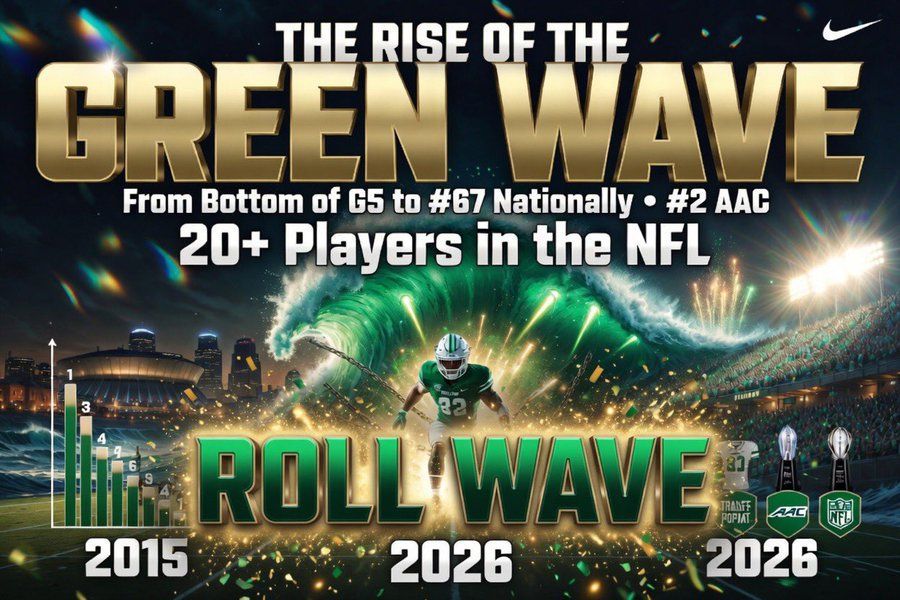

In the decade-plus since 2015, Tulane Green Wave football has undergone one of the most impressive transformations in Group of 5 history. Once an afterthought in national recruiting rankings, with classes often languishing outside the top 100–120 and producing just a handful of NFL draft picks per decade, the program has climbed into the upper echelon of mid-major recruiting.


Today, under the dual eras of Willie Fritz (2016–2023) and Jon Sumrall (2024–present), Tulane consistently lands top-75 high school classes, dominates the transfer portal, and funnels more talent to the NFL than ever before.


The result?


Sustained on-field success, including conference titles, bowl victories, and even a College Football Playoff appearance.


The Pre-2015 Baseline:

A Program in the Shadows


Before the Fritz era, Tulane recruiting was modest at best. Classes from 2015 and earlier featured mostly 2 and low 3-star prospects, with ESPN and 247Sports rankings rarely cracking the top 100 nationally.


High school talent from Louisiana and the Southeast often looked elsewhere (LSU, Alabama, etc.), and the program’s on-field struggles (frequent losing seasons) made it hard to sell.


NFL production was sporadic, isolated late-round picks or undrafted free agents, with very few players sticking in the league long-term.


Willie Fritz Lays the Foundation (2016–2023)


Willie Fritz arrived in 2016 and immediately shifted the recruiting philosophy: target high-character, high-motor 3-star developmental prospects who fit Tulane’s up-tempo, physical style.


Classes steadily improved, climbing into the top 80–100 range. Fritz emphasized in-state Louisiana talent while expanding into Texas, Florida, and beyond.


The payoff was dramatic on the field:


2022: 12–2 record, AAC championship, Cotton Bowl appearance.


Multiple bowl wins and top-25 rankings.


Recruiting mirrored this rise. By the early 2020s, Tulane was landing better 3-stars and occasional 4-stars. Stars like Tyjae Spears (RB, 3rd-round 2023 pick) and Dorian Williams (LB, 3rd-round 2023) emerged from these classes, proving Fritz’s “develop the 3-stars” mantra worked.


Jon Sumrall Accelerates the Momentum (2024-2025)


When Sumrall returned as head coach, he supercharged recruiting with modern NIL strategies, aggressive portal use, and a championship pedigree. The 2025 and especially 2026 classes mark a new high-water mark.


2026 Class:

Currently ranked #67–72 nationally (247Sports/On3 composite) and #2 in the AAC (behind only USF). It features 19 high school commits (15+ three-stars, and one four-star) plus 21 transfers, the highest-rated class in program history by average rating per recruit.


Standouts include elite IOL Tylan George (#54 nationally at position), DL Jordyn Crites, and several top Louisiana prospects.


For the first time, Tulane cracked the top 60 in some rankings.

This isn’t luck, it’s strategy and one of the best recruiting staffs around.


Sumrall retained core pieces, dominated the portal for immediate contributors, and sold Tulane’s upward trajectory (11–3 season, AAC title, CFP berth in 2025).


Local New Orleans and Louisiana recruits are staying home more often, while national talent is buying in.


Measurable Results:

Wins, Depth, and an NFL Pipeline


The recruiting upgrade has delivered tangible results:


On-Field:

From 3–9 pre-Fritz to consistent 10+ win seasons, multiple AAC titles, and playoff contention. The 2025 squad went 11–3 with a CFP appearance before falling to Ole Miss.


Talent Quality and Development:

Shift from mostly unranked or low-3-star rosters to consistent top-75 classes with higher average ratings and more positional versatility (elite OL, DL, skill players).


NFL Success:

Tulane now ranks among the top 50 FBS programs in active NFL players (20 as of mid-2025).


Recent draft highlights include:


2025: Caleb Ransaw (3rd round, Jaguars), Micah Robinson (7th round, Packers).


2024: Jha’Quan Jackson (6th round), Michael Pratt (7th round).


2023: Tyjae Spears (3rd round, Titans), Dorian Williams (3rd round, Bills).


Earlier standouts: Darnell Mooney (5th round, Bears, still active starter), plus others like Cameron Sample.


Tulane’s 2026 Pro Day featured 11 prospects, underscoring the pipeline’s strength. Ten of the 20+ active pros were mid-to-late round picks or UDFA’s who developed into contributors.


NIL Revolution:

Fear the Wave Collective Puts Tulane Ahead of the Curve. @FTWMediaGroup

 (Donate Today) https://

fearthewavecollective.com


A major catalyst in Tulane’s recruiting surge has been its pioneering approach to Name, Image, and Likeness (NIL), and no entity has been more instrumental than the Fear the Wave (FTW) Collective.


Launched in late 2021/early 2022 by passionate Tulane alumni and fans (including Michael Arata, Jimmy Ordeneaux, and Kelly Comarda), FTW was one of the very first proactive NIL collectives at the Group of 5 level. @K_Comarda

 @jko68

 @MichaelArata


While many Power 4 programs were still scrambling to understand the new rules, Tulane’s fan-driven collective hit the ground running with a humble initial goal of just $10,000 in Year


1. They quickly evolved into a powerhouse: signing NIL deals with the entire 2022-23 football roster (plus men’s and women’s basketball), creating creative content like the Jimmy O Show podcast (where athletes earned appearance fees), and delivering real financial opportunities through community partnerships, local endorsements, and media activations.


FTW’s early-mover advantage was huge. It helped retain stars like quarterback Michael Pratt with custom NIL packages during the transfer portal window and gave Tulane a legitimate selling point when competing against bigger programs for high school recruits and transfers.


Fundraising exploded with on-field success:

After the 2025 AAC title and playoff run, the collective raised over $1.1 million in donations in a matter of weeks, nearly doubling its previous annual totals and projections showed continued growth into 2026.


By 2025, Tulane took the next leap. Athletics Director David Harris announced that the university’s Green Wave Club would assume direct control of NIL and revenue-sharing fundraising starting July 1, 2025, backed by major gifts, including a transformative $3.5 million donation from Don and Lora Peters to launch the Green Wave Talent Fund.


This in-house fund supports expanded NIL opportunities, facilities upgrades, and direct compensation, positioning Tulane ahead of many programs still reliant on fragmented third-party collectives.


Fear the Wave didn’t disappear, it evolved into a key media and content partner, continuing select NIL deals through subscriptions while producing behind-the-scenes content and fan experiences. The combination of early collective innovation plus institutional backing created a seamless, competitive NIL ecosystem that few mid-majors (and even some Power programs) could match.


Why It Matters and What’s Next:


Tulane’s recruiting evolution proves that smart coaching, strong recruiting staff, culture, development, and portal savvy can overcome traditional Power 4 disadvantages.


Fritz built the foundation of belief; Sumrall added speed and star power.


The program now attracts better high school talent while excelling at player development, turning three-stars into NFL contributors at a historic rate.


As the 2026 class (already the best in school history) enrolls the Green Wave is poised for sustained contention. For fans in New Orleans and beyond, it’s no longer “what if” it’s “watch us.”


The Wave is rolling higher than ever and watch out, the 2027 class is going to make a big splash!

Make sure to follow Patrick Harkness on X @RollDatWave

#RollWave

A quick share helps us a lot!

By Bobby Autin September 14, 2026
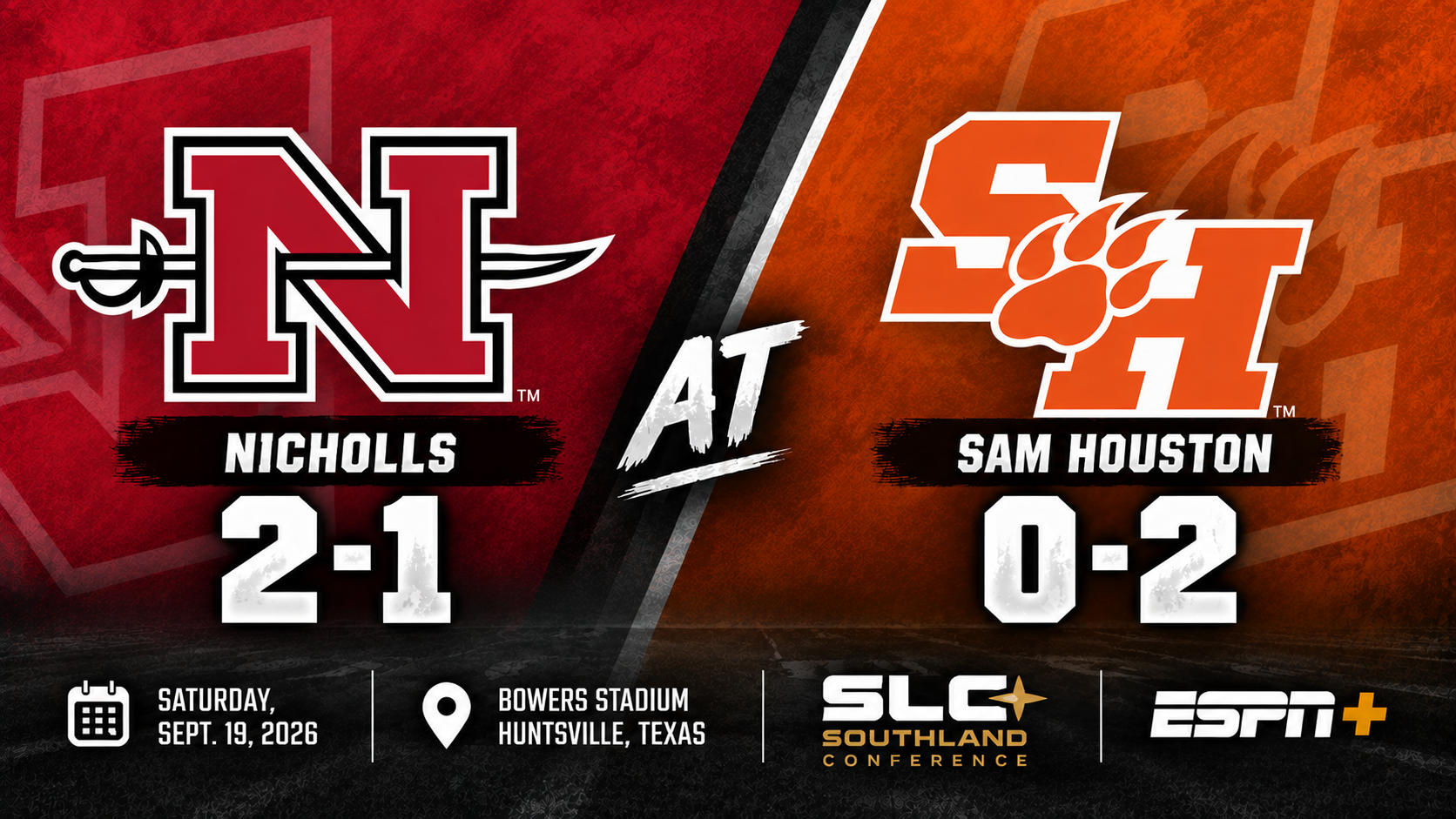
Nicholls Heads to Huntsville for Renewed Matchup With Sam Houston
By David Billiot Jr September 14, 2026
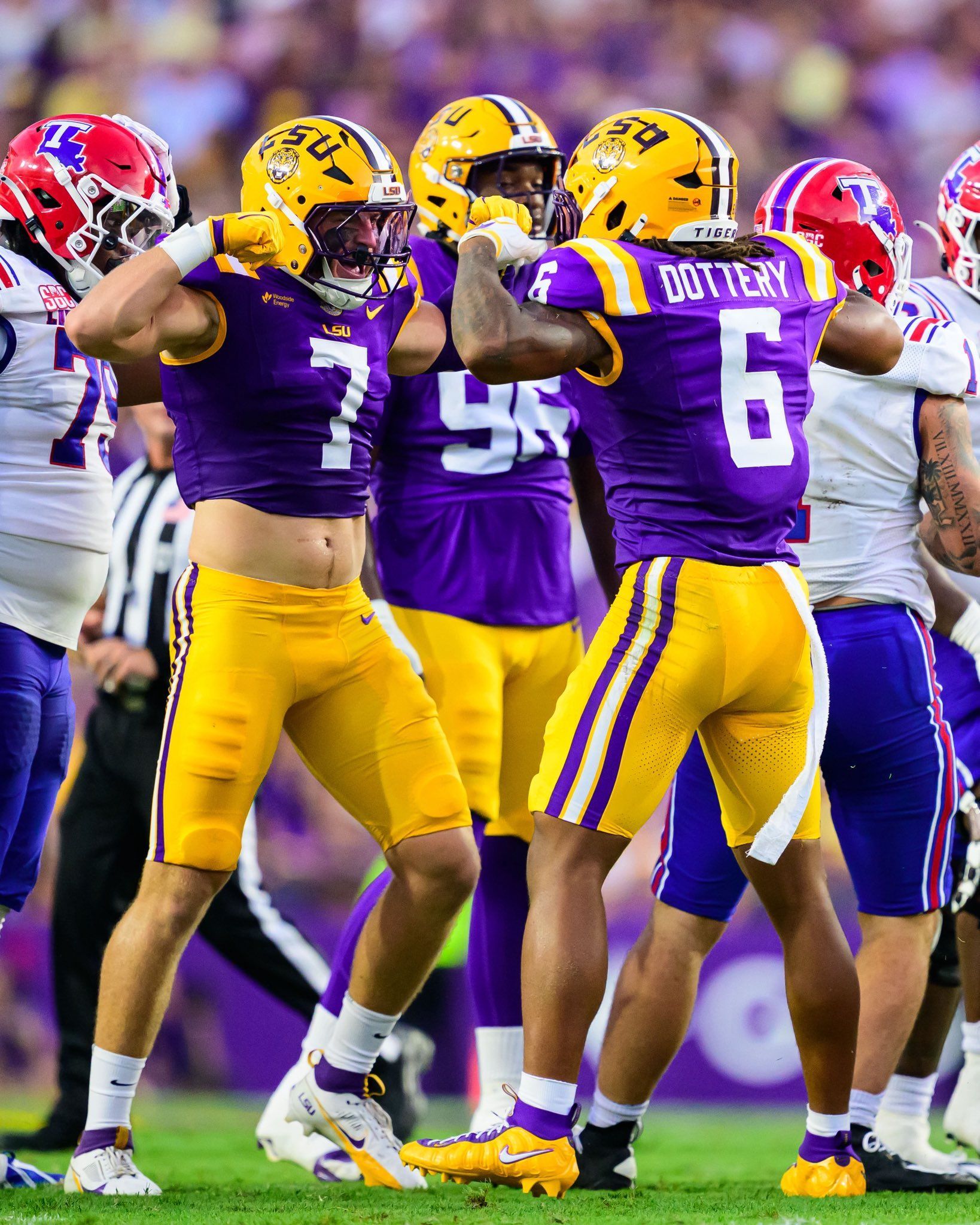
It was a tale of two halves and a story of two sides of the football. While the defense picked up where they left off against Clemson a week ago and put on another dominant performance, things did not go as smoothly for the offense. The first half was littered with mistakes, sloppiness, and overall poor play. While the LSU offense faltered, turning the ball over four times in the first half, the defense picked them up. Louisiana Tech had 0 total yards at halftime, along with -20 rushing yards. That marks the second week in a row in which they’ve held their opponent to negative rushing yards in a half. Sam Leavitt made quite a few mistakes, but he owned up to them. He said after the game that he was trying to do too much and was attempting to put the team on his back following some red zone inefficiency. To his credit, he cleaned it up in the second half and went back to work. All in all, it may seem strange to nitpick a 31-point win. We watched almost the same exact game a year ago when the Bulldogs came to Tiger Stadium in week 2 of the 2025 season. Brian Kelly’s team stumbled to a 23-7 victory, but was also very ugly. The positive news is that while the Tigers played equally ugly in this one, they’re improved enough where an ugly win leads to a 45-14 score.  Game Flow For the second straight week, LSU got the ball first and failed to get anything going. A quick 3-and-out forced a Grant Chadwick punt for LA Tech’s first possession. As they did a week ago, Blake Baker’s defense forced a 3-and-out of their own, capped off with Deuce Geralds’s first sack of his career. Sam Leavitt used both his arm and legs on the ensuing drive with multiple gains of 17 yards, including a strike to Winnie Watkins and a scramble down in to the red zone. The drive stalled, though, leading to a Scott Starzyk 29-yard field goal to give LSU a 3-0 lead. A quick 3-and-out would get the ball right back to the Tigers and that’s where they found their first explosive play of the night. Leavitt hit Jackson Harris for a huge gain of 42 yards to get the ball down to the LA Tech 2 yard line. Two plays later, he used his legs and LSU jumped out to a 10-0 lead. TJ Dottery initiated what would be the first of two forced fumbles, giving his team great field position at the Bulldogs 41 yard line, but it did not amount to anything. Every offensive possession in the 2 nd quarter resulted in a 3-and-out for LA Tech with the exception of time expiring going in to halftime. LSU gave them plenty of opportunities, though, because it was a nightmare of a quarter for Lane Kiffin’s offense. First, it was a Eugene Wilson III fumble after a nice catch and run, followed by Leavitt’s first interception on an overthrow to Trey’Dez Green. The offensive production had halted for the Tigers, but that was starting to turn around after the back-to-back turnovers. Leavitt had completions of 15, 24, and 15 yards to Green as LSU drove right down the field to set up a 1 st and goal from the 2 yard line. Consecutive plays of -2 yards set up a 3 rd and goal from the 6 and that’s when the entire first half got flipped on it’s head. Leavitt threw a quick slant to Harris, but Jordan McRae picked it off and took it back 100 yards for a return touchdown and what looked to be a 17-0 lead for LSU, quickly turned in to a 10-7 head scratcher. Once again, Kiffin’s offense came right back out and started marching down the field with big completions to Harris and Green. Coming out of a timeout with 39 seconds left in the half and facing a 3 rd and 8 at LA Tech’s 14 yard line, Leavitt threw his third interception of the quarter and Tiger Stadium had become frustrated. Sounds of soft groans and a few boos rained down as the teams went to the locker room. The Bulldogs came out and went 3-and-out for the sixth time, followed by a shanked punt that set LSU up with more great starting field position. Dilin Jones finally broke free after a rough first half of 10 carries for 3 yards. He busted a 46-yard run to get down to the LA Tech 2 yard line. Unfortunately, the redzone issues persisted. The next three plays went for -1, 0, and -8 yards and the Tigers had to settle for a 25-yard Starzyk field goal to make it 13-7. At the 9:34 mark of the 3 rd quarter, LA Tech finally got their 1 st first down thanks to a DJ Pickett pass interference. Two plays later, they got another one on a Princewill Umanmielen roughing the passer. LSU would eventually force a 4 th and 5 conversion attempt that was a deep shot over Dashawn Spears’s head, but he recovered and broke it up to get the ball back to the Tigers. Needing to get some rhythm, LSU quickly found themselves behind the chains thanks to a false start and another negative Jones rush. But, as he did all night, Trey’Dez Green stepped up and made a 23-yard reception. Three plays later, Leavitt bounced outside to green grass on a designed QB run for his second rushing touchdown of the night to give the Tigers some breathing room. A two-point conversion made it 21-7. Spears’s good night continued on the next drive as he blasted Blake Baker coming off of the edge, forcing a floated pass right in to the waiting arms of Pickett. LSU, again, had to settle for a Starzyk field goal for a 24-7 lead. Following another Bulldog 3-and-out, Charlie Weis Jr dialed up a new wrinkle that had yet to be seen. On a 3 rd and 1, he lined up Green in the backfield for a direct snap to get the conversion. The very next play showed Leavitt’s improvisation skills on full display, as he scrambled to his right and bought just enough time to point for Wilson III to go deep. The Florida transfer made an incredible over the shoulder catch for a 53-yard gain, which led to Leavitt’s third rushing touchdown of the night on the next play. It was 31-7 and LSU fans were finally feeling better, although it took much longer than anticipated. LA Tech responded with their first self-generated first down of the night, but two players later, freshman Deuce Geralds added to his incredible performance by ripping the ball out of Jalen Mickens’s hands as he was being held up by Ty Benefield. The recovery and return by Jhase Thomas set the Tigers up with an immediate redzone possession at the 20 yard line and just when it looked like they were set to stall out, again, Leavitt hit Green for his first touchdown catch of the season to make it a 38-7 game. With the reserves coming in on defense for Blake Baker, they stumbled, once again. Mickens caught a ball up the seam and shot out of a canon for a 67-yard touchdown. That makes for back-to-back weeks that the 2’s and 3’s caved late in the game. After the teams traded a few punts, Landen Clark entered the game and showed a nice rappoire with Tyree Holoway. The two connected for passes of 21 and 16 yards, followed by a 7-yard touchdown run by Clark to finish off the scoring and make it a 45-14 game and that would be the final score. Conclusion While far from pretty, the ultimate goal is to stay healthy and win the game. LSU did both of those things and now sits at 2-0 with a massive game on the way. The Tigers will hit the road for the first time in 2026 for the game everyone around the country has been waiting for since last November. It’s LSU vs Ole Miss for Lane Kiffin’s return to Oxford. The Rebels are off to a 2-0 start of their own, following a last-minute victory in week 1 over Louisville and a thrashing of Charlotte this week. The Tigers are currently -2.5 point favorites, but will have to play much cleaner football as they head to an extremely hostile environment. Full preview for the game will be coming later this week, so stay tuned in here at The Kneaux!
Show More