LSU's Hearbeat of Bayou Culture Returns
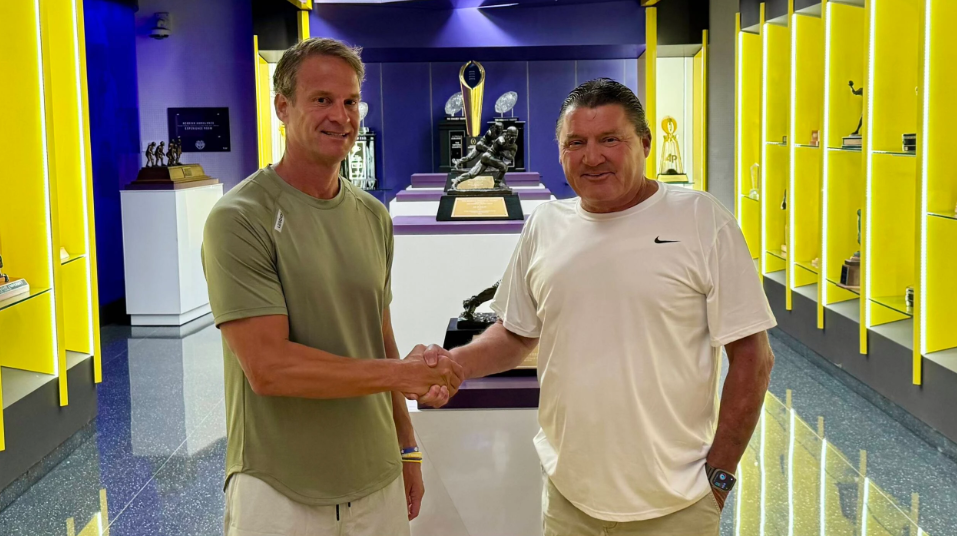
Lane Kiffin sat in his office with Big Cat and PFT Commenter for Pardon My Take’s annual Grit Week series.
PFT jokingly asked Kiffin, “Have you gotten to meet and know Mike the Tiger yet?”
Kiffin briefly explained trying to have “a moment” with Mike before the conversation quickly pivoted.
“That is really why we need Coach O,” Kiffin said.
Kiffin’s lighthearted attempt to connect with Mike the Tiger landed because it pointed to something real: LSU had lost a piece of its soul. Mike is more than a mascot. He’s the living symbol of the program’s unique Bayou culture, the unmistakable cultural heartbeat Ed Orgeron once brought every day with his “one team, one heartbeat” energy that made the program feel truly alive.
Say what you want about the way things ended between 2020 and 2021. Based on sourced information I won’t get into here, I’d argue much of the public perception surrounding Orgeron’s exit misses the full picture. Binder in hand, Orgeron built the greatest team in college football history, an achievement that never seemed fully appreciated by LSU’s leadership at the time.
Brian Kelly was brought in to “steady the ship.” In some ways, he did. LSU remained competitive and relevant nationally. But in other ways, Kelly’s tenure slowly chipped away at the culture and identity that made LSU football unique.
Over four seasons, Kelly often said the right things publicly, but in true politician form, his actions rarely matched his words. The result was a gradual erosion of the program’s identity and growing apathy within a fan base that prides itself on passion and pride. Eventually, that disconnect led to Kelly’s reported $54 million exit from Baton Rouge.
In a separate Grit Week interview, Orgeron was blunt about why that disconnect happened. When asked about Kelly’s infamous first appearance on the basketball court, Coach O didn’t hesitate: “It’s over, he ain’t got a chance. If you try to be somebody you ain’t, they are going to smell it from a mile away.”
It felt fitting that Frank Wilson stepped in as interim head coach, describing the opportunity as “answering the call of Mother University.”
Wilson understood what LSU was supposed to be because he lived it, as a Louisiana native and as a longtime assistant deeply embedded in the fabric of the program. That is not to diminish the work he did during his second stint at LSU, but at times Wilson felt like a bridge to the culture Kelly never fully embraced. He helped keep the program tethered to its Louisiana roots while Kelly attempted to reshape LSU in his own political and calculated image.
When Wilson later departed for Ole Miss and LSU hired Kevin Smith to coach running backs, Kiffin, general manager Billy Glasscock, and the rest of the staff did an admirable job holding together the recruiting class and stabilizing the roster. Orgeron alluded to assisting with this by speaking to families of recruits around signing day, pulling them back to the program they always wanted.
Still, something was missing.
This is not to suggest LSU lacked coaches with Louisiana ties, but the program lacked a singular embodiment of its identity. It lacked the unmistakable face of Bayou culture.
It lacked Ed Orgeron.
Orgeron understood the deep pull better than most. He added that 99 percent of players born in Louisiana at some point dreamed of running through those H-style goal posts in Tiger Stadium and becoming a Tiger. “You just have to recapture it.”
In that same interview, Orgeron laid out exactly what he brings back to Baton Rouge. “It’s an energy you just can’t match at other places,” he said of LSU. He recounted the advice he gave Kiffin: “That’s what I told Lane, ‘Recruit them.’ They’re going to be there for you through thick and thin. The guy before (you) didn’t do it. You cannot disassociate yourself with these people because this is their life.”
Coach O knows that truth because he was born with it. “I was raised in the state of Louisiana,” he said. “Nobody ever had to tell me about the expectations at LSU. I got it.”
That’s the culture he’s always understood: “That’s what makes this state, the people. They don’t come here to see the mosquitoes, the humidity and the alligators, it’s because of the people and the culture… LSU makes the state of Louisiana and everybody loves the LSU Tigers.”
Kiffin needs someone who can immediately strengthen relationships between a largely new staff and high school coaches across Louisiana. In an era dominated by transfer portal mercenaries and transactional roster building, LSU also needs someone capable of reigniting genuine passion inside the building.
That is what Orgeron brings.
He is a motivator. A recruiter. A culture builder. A general who has stood on the front lines in Death Valley and experienced LSU at both its highest highs and its lowest lows.
Now, as special assistant to recruiting and defense, Orgeron returns without the burdens that come with being a head coach. No administrative distractions. No CEO responsibilities.
Instead, he can focus entirely on the qualities that made him so valuable in the first place: relationships, energy, intensity, and a forever love for LSU.
A quick share helps us a lot!